
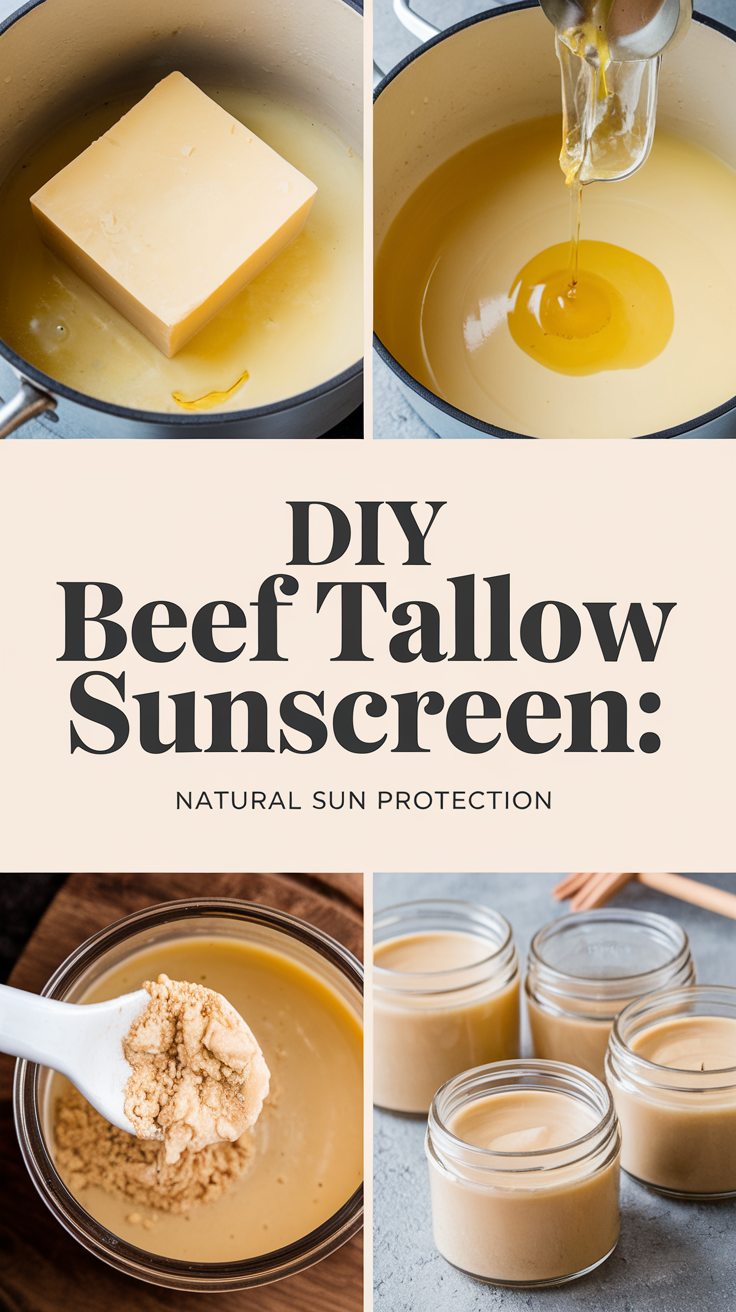
Introduction to Beef Tallow Zinc Balm
Beef tallow has become a popular ingredient in natural skincare because it creates a rich, protective balm that helps soften dry skin and support the skin barrier.
When combined with non-nano zinc oxide, beef tallow can be used to make a thick outdoor skin balm that leaves a visible mineral layer on the skin.
However, homemade beef tallow sunscreen should not be treated as a replacement for a commercially tested broad-spectrum sunscreen.
SPF can only be confirmed through standardized laboratory testing, so any homemade recipe has an unknown level of UV protection.
This guide explains how to make a beef tallow zinc balm safely, what each ingredient does, and what claims to avoid when using homemade sun-care recipes.
Important Safety Note About Homemade Sunscreen
Homemade sunscreen recipes are popular online, but they are not the same as tested sunscreen products sold in stores.
The protection of a sunscreen depends on the exact zinc oxide percentage, particle dispersion, formula stability, water resistance, application thickness, and laboratory testing.
Even if a homemade balm contains zinc oxide, there is no reliable way to know its SPF at home.
For prolonged sun exposure, swimming, sweating, outdoor sports, or children, use a commercially tested broad-spectrum sunscreen and sun-protective clothing.
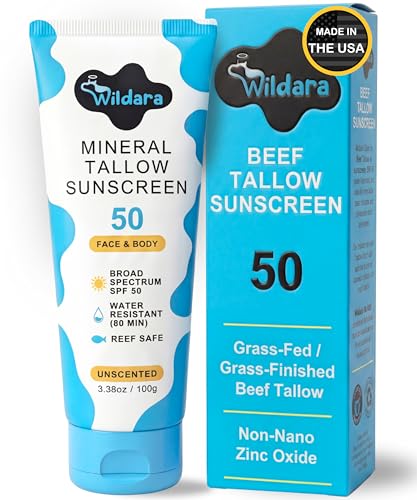
View on AmazonAs an Amazon Associate, I earn from qualifying purchases.

View on AmazonAs an Amazon Associate, I earn from qualifying purchases.
Why Beef Tallow Is Used in Skin Balms
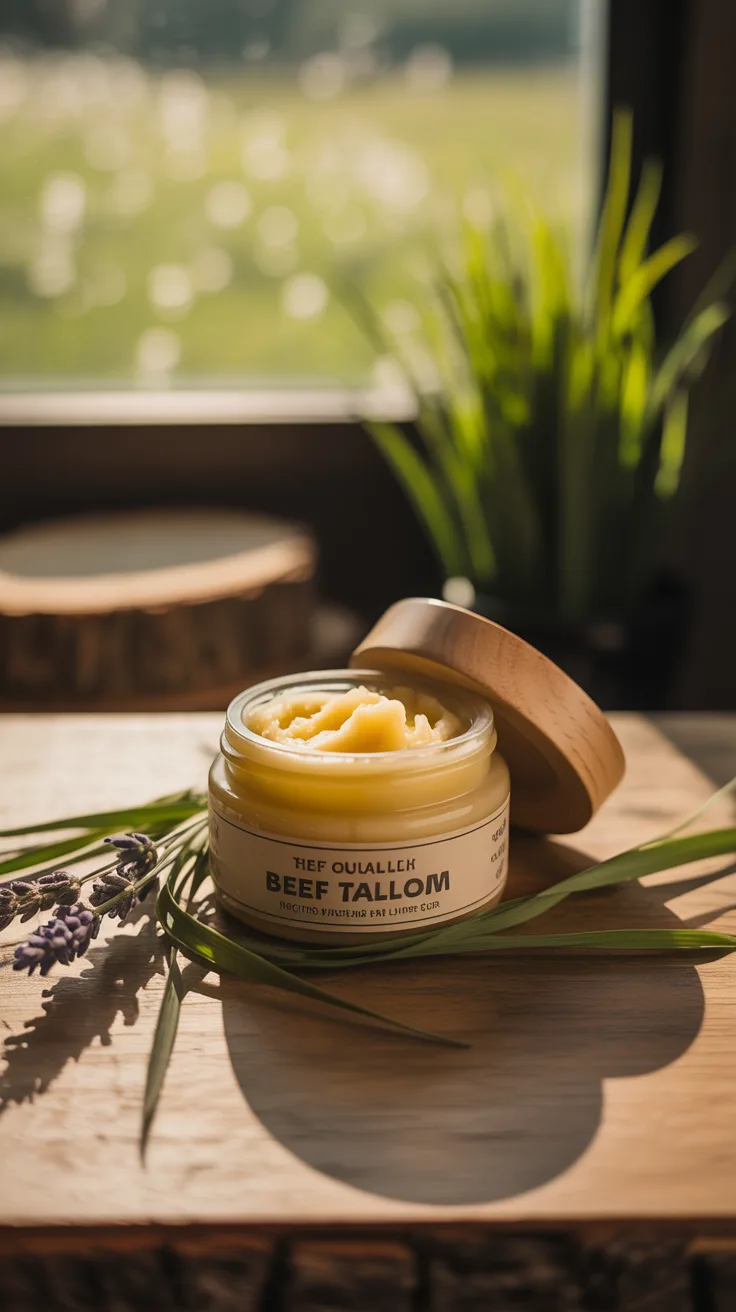
Beef tallow is a rendered animal fat that creates a dense, occlusive balm texture.
It helps reduce moisture loss by forming a protective layer over the skin.
The fatty acid profile of tallow shares some similarities with skin lipids, which may explain why many people find it comfortable and moisturizing.
Grass-fed beef tallow may contain small amounts of fat-soluble compounds, but it should not be described as having a proven SPF.
- Creates a rich balm texture
- Helps seal moisture into the skin
- Supports dry or rough skin areas
- Works well with waxes and oils
- Can feel more nourishing than lightweight lotions

View on AmazonAs an Amazon Associate, I earn from qualifying purchases.

View on AmazonAs an Amazon Associate, I earn from qualifying purchases.
Pro tip: Choose well-rendered, cosmetic-quality, or food-grade tallow with a mild scent and smooth texture.
What Zinc Oxide Does
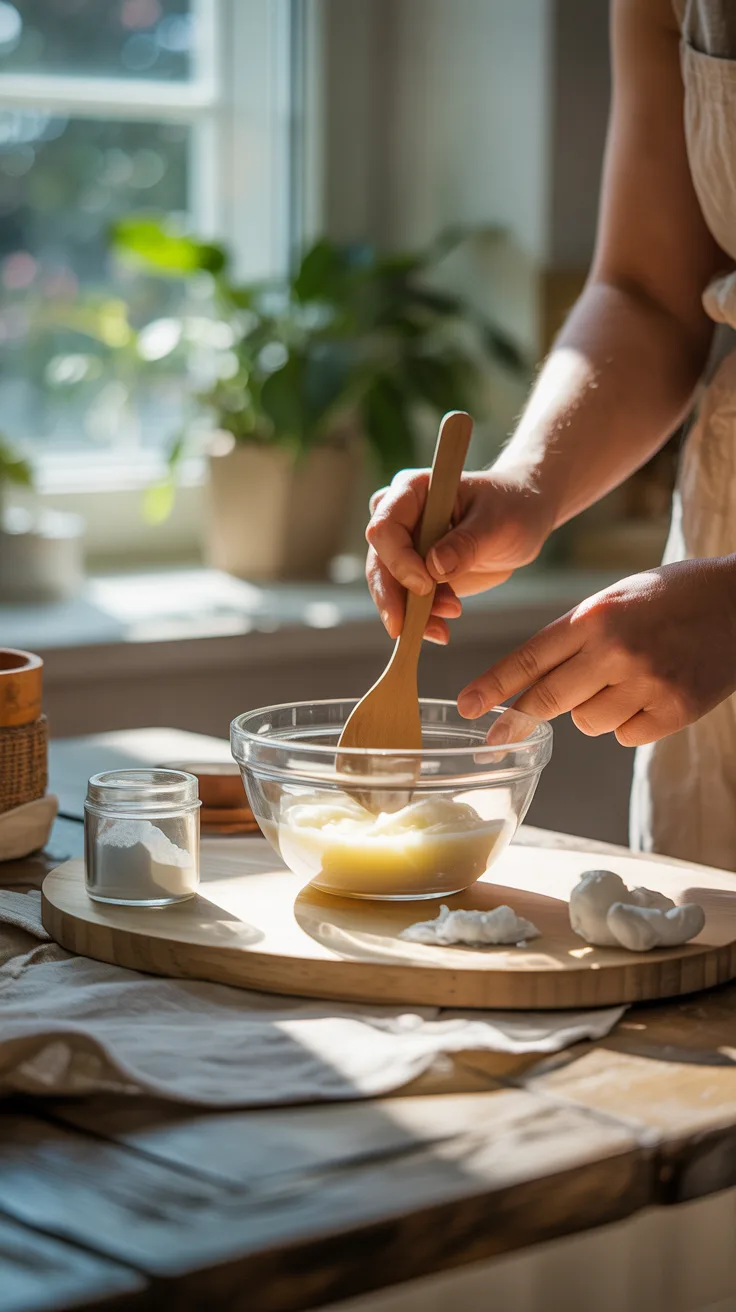
Zinc oxide is a mineral UV filter used in many commercial sunscreens because it can help provide broad-spectrum coverage when professionally formulated and tested.
In a homemade balm, zinc oxide creates a visible mineral layer, but the finished product still cannot be assigned a verified SPF without lab testing.
Non-nano zinc oxide is often preferred in DIY body-care recipes because the particles are intended to remain on the skin surface rather than being absorbed.
Avoid inhaling zinc oxide powder during mixing.
 As an Amazon Associate, I earn from qualifying purchases.
Myth vs Fact: Beef Tallow Sunscreen Claims
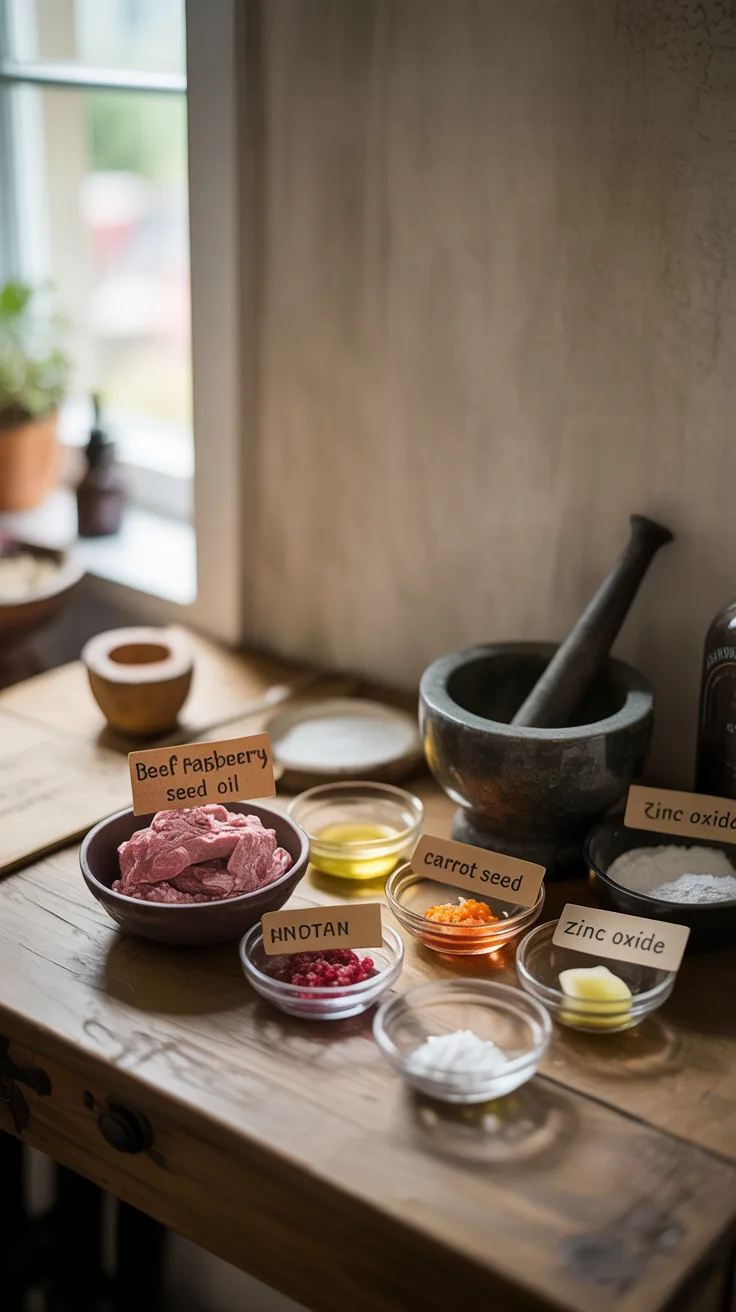
| Claim | Accuracy | Better Explanation |
|---|---|---|
| Beef tallow has natural SPF | Not proven | Beef tallow is best described as a moisturizing balm base. |
| Red raspberry seed oil replaces sunscreen | Not reliable | It is an emollient oil and should not be used as a verified UV filter. |
| Carrot seed oil provides sunscreen protection | Not reliable | It may be used for skin conditioning or scent but not as proven SPF. |
| Zinc oxide is used in mineral sunscreens | True | It must be properly dispersed and tested to confirm SPF. |
| Homemade sunscreen can be labeled SPF 30 | False | SPF requires standardized laboratory testing. |
Ingredients for a Beef Tallow Zinc Balm
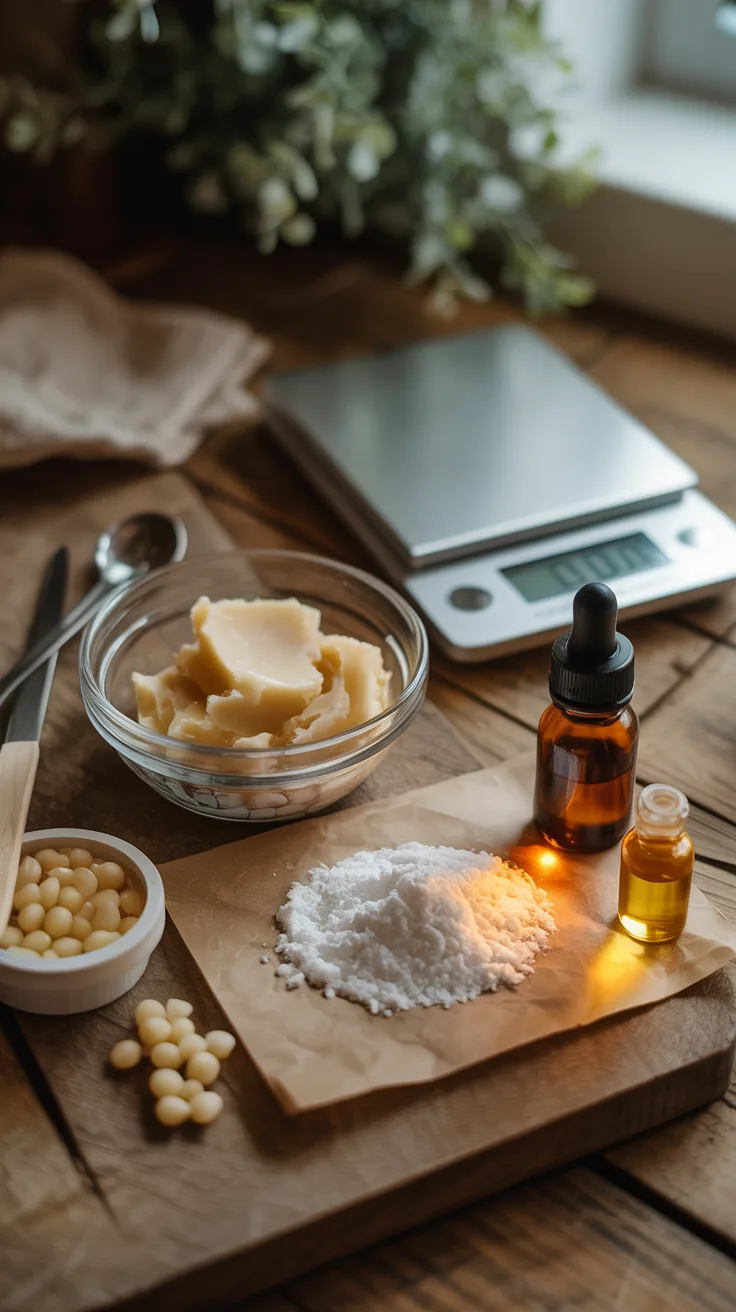
This recipe is best described as a beef tallow zinc balm rather than a verified sunscreen.
| Ingredient | Suggested Amount | Purpose |
|---|---|---|
| Refined beef tallow | 1 cup | Rich balm base |
| Non-nano zinc oxide | 15% to 25% by weight | Visible mineral barrier |
| Jojoba oil or olive oil | 2 tablespoons | Softens texture |
| Beeswax | 1 to 2 tablespoons | Improves firmness and staying power |
| Vitamin E oil | 1 teaspoon | Antioxidant for oils |
A digital kitchen scale for skincare helps measure ingredients more accurately than tablespoons.
Ingredients to Use Carefully
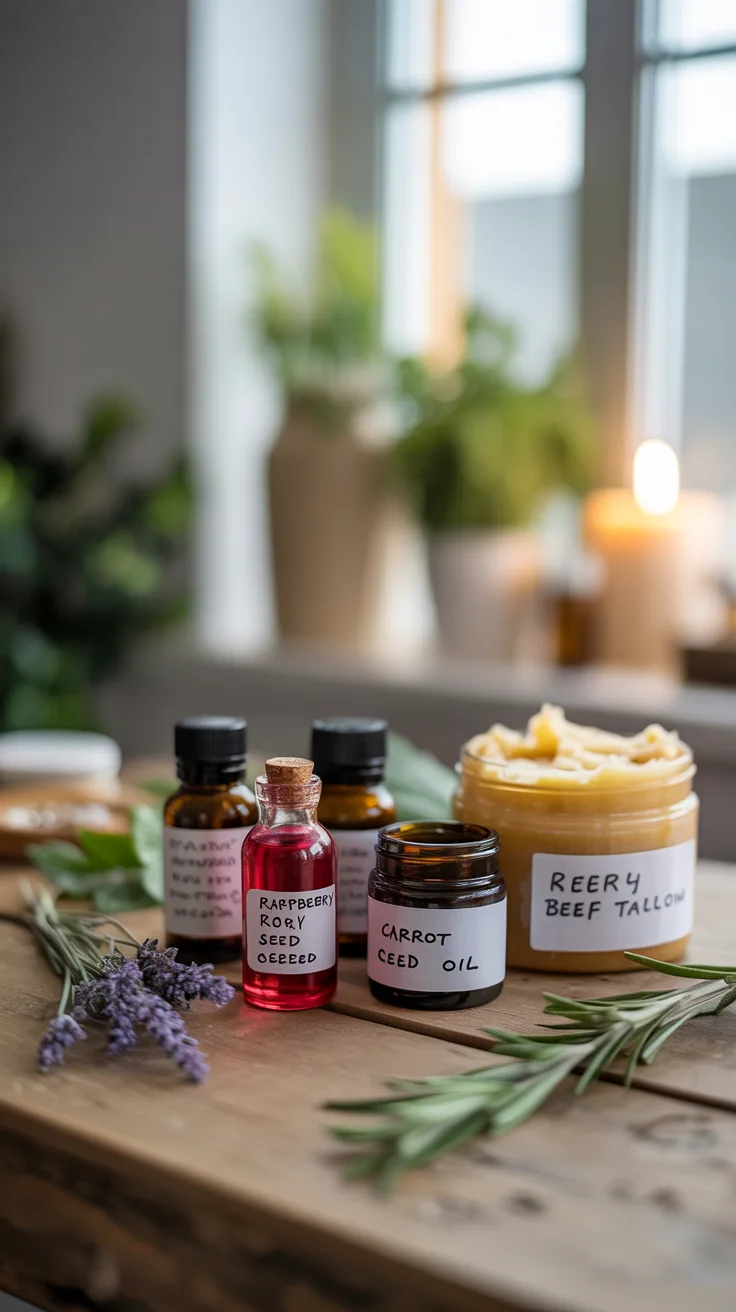
Red raspberry seed oil and carrot seed oil are often promoted online as natural sunscreen ingredients, but their SPF claims are not reliable enough for sun protection advice.
If used, they should be treated as conditioning oils rather than UV filters.
Essential oils should be avoided in sun-exposed balms unless the oil is known to be non-phototoxic and skin-safe at the chosen dilution.
Citrus essential oils can increase the risk of irritation or sun sensitivity.
Required Equipment
- Double boiler or heat-safe glass bowl
- Digital scale
- Thermometer
- Glass storage jars or tins
- Silicone spatula or whisk
- Face mask for handling zinc oxide powder
- Disposable gloves
- Labels for batch date and ingredients
Pro tip: Use dedicated skincare tools instead of tools used for food preparation.
Step-by-Step Preparation Method
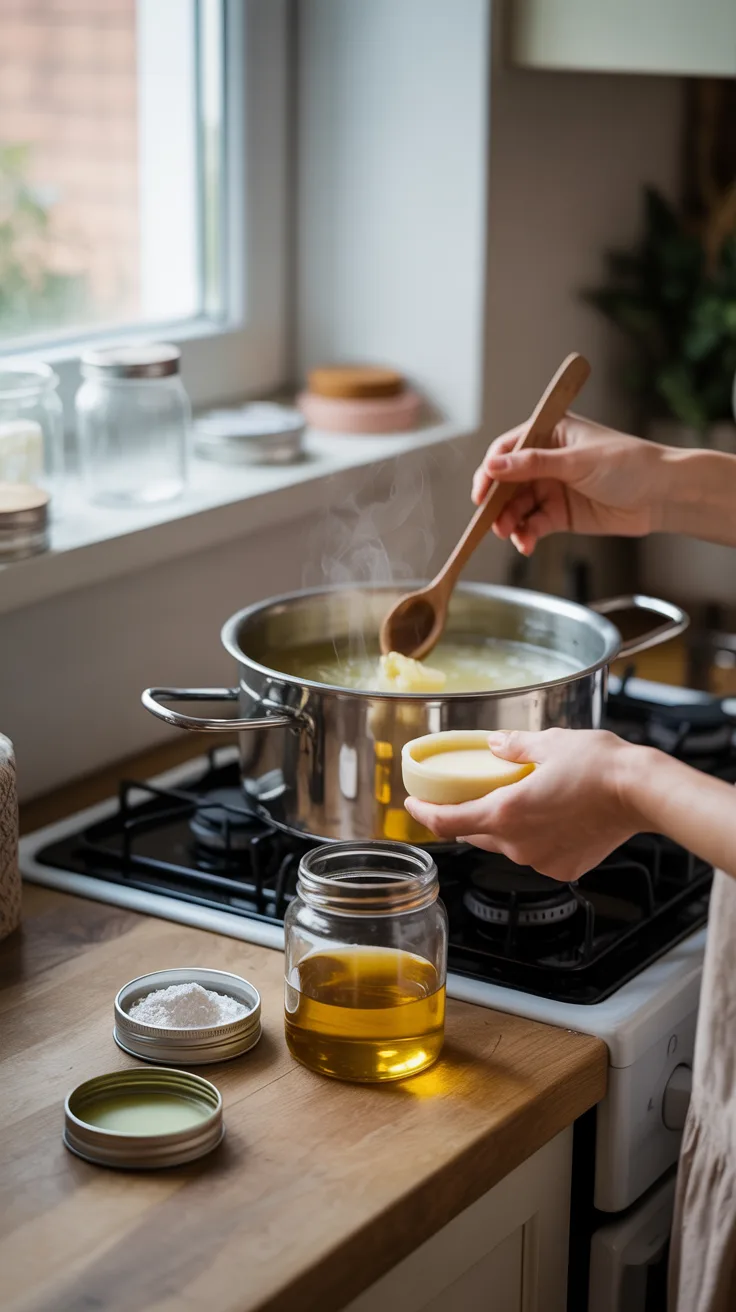
Clean and sanitize all tools, jars, and surfaces before beginning.
Wear a mask before opening zinc oxide powder to avoid breathing in airborne particles.
- Set up a double boiler over low heat.
- Add the beef tallow and beeswax to the top bowl.
- Warm gently until melted without overheating.
- Remove from heat and stir in jojoba oil or olive oil.
- Allow the mixture to cool slightly while still remaining liquid.
- Slowly add the non-nano zinc oxide while stirring continuously.
- Mix thoroughly until the powder appears evenly dispersed.
- Add vitamin E oil and stir again.
- Pour into clean jars or tins.
- Let the balm cool completely before sealing.
- Label the container with the date and ingredient list.
You can use a glass cosmetic jar set.
Application Guidelines
Apply the balm in a visible, even layer to areas where extra barrier support is desired.
Because this recipe has no verified SPF, do not rely on it as your only form of sun protection.
For outdoor exposure, pair sun-safe habits with a tested broad-spectrum sunscreen.
- Apply tested sunscreen according to the product label
- Wear a wide-brim hat and UV-protective clothing
- Seek shade during peak sun hours
- Reapply tested sunscreen after swimming or sweating
- Avoid using homemade balm on irritated or broken skin
Pro tip: A balm with zinc oxide may leave a white cast, especially when applied generously.
Storage and Shelf Life
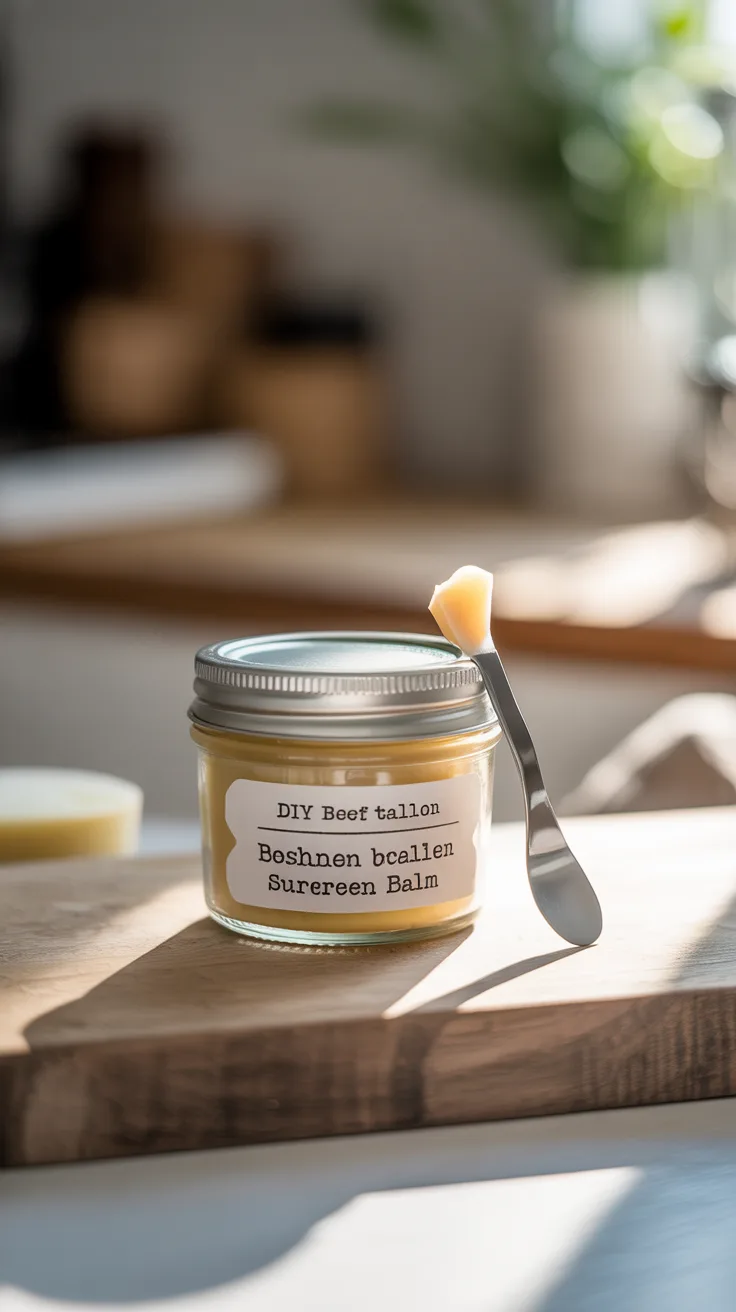
Store the balm in a cool, dry place away from direct sunlight.
Because this recipe does not contain water, it is less prone to microbial growth than a lotion, but cleanliness still matters.
Vitamin E helps slow oxidation of oils, but it is not a preservative against bacteria, yeast, or mold.
- Use clean, dry hands or a spatula
- Keep the lid tightly closed
- Discard if the smell, color, or texture changes
- Make small batches for better freshness
- Label each batch with the preparation date
Homemade tallow balm is best used within a few months.
Common Mistakes to Avoid
One of the biggest mistakes is assuming that zinc oxide automatically turns a homemade balm into SPF-rated sunscreen.
Another common mistake is measuring zinc oxide by spoonfuls instead of weight, which can lead to inconsistent results.
Poor mixing can cause uneven zinc oxide distribution, meaning some areas of skin may receive much less mineral coverage than others.
Using essential oils without checking phototoxicity can also increase the risk of irritation during sun exposure.
- Do not claim a homemade SPF number
- Do not rely on beef tallow as a UV filter
- Do not use raspberry seed oil as a sunscreen replacement
- Do not inhale zinc oxide powder
- Do not use the balm as the only sun protection for children
Who Should Avoid This Recipe
Anyone with beef allergies, very acne-prone skin, active irritation, or sensitivity to heavy balms should patch test carefully or avoid this recipe.
People with a history of skin cancer, photosensitivity, melasma, or medical conditions affected by sun exposure should use dermatologist-recommended sun protection.
This recipe is not appropriate as the only sun protection for babies, children, or anyone spending extended time outdoors.
Conclusion
A beef tallow zinc balm can be a nourishing skincare product for people who enjoy simple, traditional balm formulas.
Beef tallow provides a rich moisturizing base, while zinc oxide adds a visible mineral layer.
The finished recipe should not be marketed or treated as a verified SPF sunscreen because homemade formulas cannot be accurately rated without laboratory testing.
For real sun protection, use a commercially tested broad-spectrum sunscreen along with shade, hats, sunglasses, and protective clothing.
Frequently Asked Questions
Is beef tallow sunscreen effective against UV rays?
Homemade beef tallow sunscreen has unknown UV protection because SPF and broad-spectrum performance require standardized laboratory testing.
Does beef tallow have natural SPF?
Beef tallow is not a proven sunscreen ingredient and should be described as a moisturizing balm base rather than a verified UV filter.
Can zinc oxide make a homemade balm into sunscreen?
Zinc oxide is used in mineral sunscreens, but a homemade zinc balm still cannot be assigned an SPF without proper formulation and testing.
What SPF level does this beef tallow zinc balm provide?
The SPF is unknown because homemade formulas cannot be accurately rated by appearance, ingredient lists, or online recipes.
Is red raspberry seed oil a natural sunscreen?
Red raspberry seed oil is not a reliable replacement for tested sunscreen and should be treated as a skin-conditioning oil.
Is carrot seed oil a natural sunscreen?
Carrot seed oil should not be relied on for SPF protection because sunscreen performance must be confirmed through testing.
How long does homemade beef tallow balm last?
When stored properly in a clean, airtight container, homemade beef tallow balm is best used within a few months.
Is beef tallow zinc balm safe for sensitive skin?
Some people tolerate beef tallow well, but sensitive skin can react to any ingredient, so a patch test is recommended before wider use.
Can this recipe be used on children?
This homemade balm should not be used as a child’s only sun protection because children need reliable, tested sun protection methods.
