Introduction
Winter is a challenging time for our skin. I’ve learned this the hard way after countless mornings waking up with a dry, tight face despite my best efforts. The combination of harsh outdoor winds, indoor heating, and lower humidity levels creates the perfect storm for dehydrated, irritated skin. After years of trial and error (and some truly flaky disasters), I’ve finally perfected a winter nighttime skincare routine that delivers deep hydration while I sleep. In this article, I’ll share my 12-step routine that transformed my winter skin from parched to plump and glowing.
Understanding Winter Skin Needs
During winter, our skin faces unique challenges that require special attention. I remember my first winter after moving to a colder climate—I stubbornly stuck to my lightweight summer products and paid the price with red, irritated patches that took weeks to heal.
Here’s what happens: cold air holds less moisture than warm air, while indoor heating further strips humidity from our environment. This double-whammy depletes our skin’s natural moisture barrier, leading to:
- Increased transepidermal water loss (moisture evaporating from our skin)
- Compromised skin barrier function
- Heightened sensitivity and irritation
- Flakiness and visible dry patches
Our skin produces less oil in winter too, which might sound great if you’re normally oily, but it means even less natural protection against the elements. That’s why a winter nighttime skincare routine focused on deep hydration is essential—it’s your opportunity to repair daily damage and fortify your skin while you sleep.
Step 1: Remove Makeup Thoroughly

I used to be guilty of the half-hearted makeup wipe swipe before bed, especially on cold nights when all I wanted was to dive under the covers. Big mistake! Leftover makeup and environmental pollutants can cause inflammation and prevent your hydrating products from penetrating properly.
For effective makeup removal without stripping your skin:
- Use an oil-based cleanser or balm first to dissolve makeup and sunscreen
- Massage gently in circular motions, paying special attention to eye makeup
- Remove with a soft, lukewarm washcloth (hot water further dries your skin)
- For stubborn eye makeup, hold a soaked cotton pad over the area for 30 seconds before wiping
Pro Tip: Keep makeup-removing micellar water on your nightstand for those nights when you’re too exhausted for your full routine. It’s better than sleeping in makeup, though not ideal for everyday use.
Step 2: Cleanse with a Gentle Cleanser
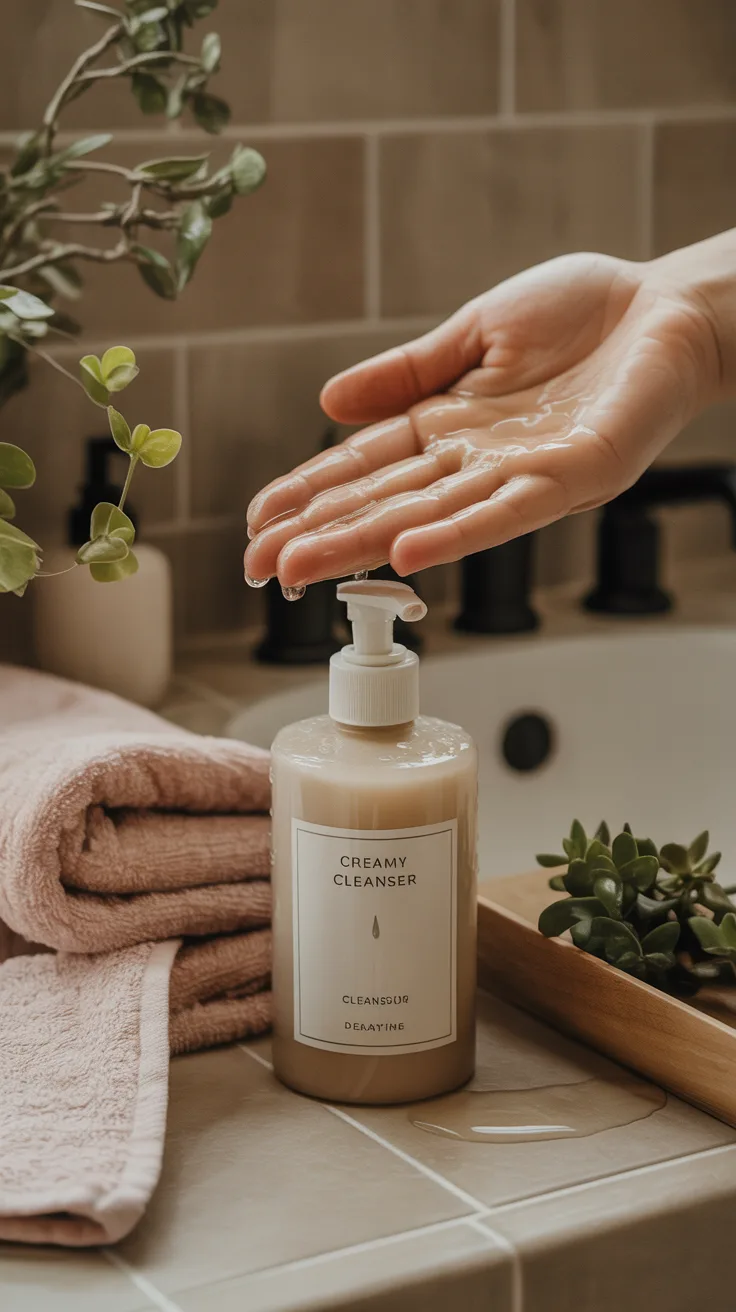
After removing makeup, a second cleanse with a hydrating, non-stripping formula is essential. I learned this lesson after using a harsh foaming cleanser one winter that left my skin so tight it actually hurt to smile.
Look for these gentle cleansing options:
- Cream or milk cleansers with ceramides or glycerin
- Oil cleansers formulated with non-comedogenic oils
- Cleansing balms that melt into a silky texture
- pH-balanced formulas (around 5.5) that won’t disrupt your skin barrier
Massage the cleanser gently with lukewarm (never hot) water, and pat—don’t rub—your face dry with a clean towel, leaving it slightly damp for the next steps.
Step 3: Exfoliate Wisely
Exfoliation is tricky in winter. On one hand, it helps remove dead skin cells that can prevent product absorption; on the other, over-exfoliating can damage your already stressed moisture barrier. I once exfoliated daily during a particularly dry winter and ended up with red, irritated skin that took weeks to recover.
Winter exfoliation guidelines:
- Limit physical scrubs to once weekly (or avoid entirely if your skin is sensitive)
- Opt for gentle chemical exfoliants like lactic acid or PHAs
- Reduce frequency to 1-2 times weekly (compared to 3-4 times in summer)
- Always follow with extra hydration
Pro Tip: If your skin feels tight or looks red after exfoliating, you’re either using too harsh a product or exfoliating too frequently. Scale back and focus on hydration instead.
Step 4: Apply a Hydrating Toner
Forget the astringent, alcohol-based toners of the past. Winter calls for hydrating toners that add moisture back to your skin. I keep mine in the refrigerator for a refreshing, de-puffing effect that doesn’t compromise hydration.
Look for these hydrating ingredients:
- Hyaluronic acid (draws moisture into the skin)
- Glycerin (a humectant that attracts water)
- Panthenol (B5, soothes and hydrates)
- Aloe vera (calming and moisture-binding)
Apply with clean hands, pressing gently into still-damp skin rather than using a cotton pad, which can absorb too much product.
Step 5: Use a Nourishing Serum
Serums are the workhorses of your winter nighttime skincare routine. Their concentrated formulas deliver active ingredients deep into the skin. I layer two different serums in winter—one for hydration and one for repair.
Winter-friendly serum ingredients:
- Multi-molecular weight hyaluronic acid (for surface and deep hydration)
- Ceramides (rebuild your skin barrier)
- Peptides (support collagen production)
- Niacinamide (strengthens barrier, reduces inflammation)
- Antioxidants like vitamin C (repair environmental damage)
Apply 2-3 drops while your skin is still damp from toner, gently pressing in with your fingertips rather than rubbing.
Step 6: Moisturize with a Rich Cream
This is where your summer and winter routines should differ dramatically. The lightweight gel moisturizer that worked perfectly in July will likely leave you parched by December. I learned this the hard way after stubbornly sticking to my oil-free gel during my first northern winter—my skin became so dry it developed tiny cracks!
Winter moisturizer must-haves:
- Emollient ingredients like shea butter or squalane
- Occlusive agents like dimethicone or natural oils
- Humectants paired with occlusives to trap moisture
- Ceramides to reinforce your skin barrier
Pro Tip: Warm your moisturizer between your palms before applying—this helps it spread more easily and absorb better. I also gently press rather than rub, which minimizes irritation.
Step 7: Don’t Forget Eye Cream
The skin around our eyes is significantly thinner than the rest of our face and has fewer oil glands. In winter, this area often shows dryness first—those fine lines that appear when you’re dehydrated often start here. I neglected eye cream for years, thinking my regular moisturizer was enough, until I noticed premature crepiness developing.
What to look for in winter eye creams:
- Peptides for collagen support
- Hyaluronic acid for hydration without heaviness
- Ceramides for barrier repair
- Squalane or other lightweight oils
Apply with your ring finger (it applies the least pressure) using a gentle patting motion, and be sure to apply it before any facial oils, which could prevent absorption.
Step 8: Lock in Moisture with Facial Oil
Facial oils are the secret weapon in my winter skincare routine. They create a protective seal over your previous products, preventing moisture evaporation while you sleep. I was initially afraid oils would cause breakouts, but choosing the right one actually improved my skin’s clarity and balance.
Winter-friendly facial oils:
- Squalane (lightweight and mimics your skin’s natural oils)
- Rosehip seed oil (rich in vitamins and fatty acids)
- Jojoba oil (closest to human sebum)
- Marula oil (rich but absorbs well)
Apply 3-4 drops, warming between palms first, then press gently into skin as the final step of your routine.
Step 9: Spot Treatment for Specific Concerns
Winter doesn’t mean other skin concerns disappear. In fact, the stress of environmental changes can trigger breakouts, while dryness can exacerbate issues like eczema or rosacea. The trick is addressing these concerns without further compromising your skin barrier.
Winter-friendly spot treatments:
- For breakouts: Salicylic acid or sulfur-based treatments (avoid drying benzoyl peroxide)
- For flaky patches: Targeted application of facial oil or balm
- For redness: Centella asiatica or green tea extracts
- For eczema-prone areas: Colloidal oatmeal or prescription treatments
Pro Tip: Apply spot treatments before your moisturizer for acne concerns, but after moisturizer for dry or irritated areas. This creates a buffer that prevents irritation while still allowing active ingredients to work.
Step 10: Use a Humidifier
This game-changer isn’t applied to your skin, but it might be the most important step in your winter nighttime skincare routine. Indoor heating systems strip moisture from the air, which in turn pulls moisture from your skin while you sleep. I noticed a dramatic difference in my skin’s hydration levels after just one week of sleeping with a humidifier.
Place a humidifier in your bedroom, aiming to maintain humidity levels between 40-60%. Clean it regularly according to manufacturer instructions to prevent mold or bacteria growth. I fill mine with filtered water just before bed and position it about 3 feet from my face for optimal benefits.
Step 11: Drink Plenty of Water
It’s easy to forget to drink water when it’s cold outside. I certainly drink less in winter, often replacing water with dehydrating coffee and tea. But internal hydration is just as important as external moisturizing. Our skin cells need adequate hydration to function properly and maintain elasticity.
I keep a large insulated water bottle on my nightstand and aim to finish it before bed. Herbal teas count toward your daily intake too, and warm lemon water can be particularly soothing before bed while supporting overnight detoxification processes.
Step 12: Get Adequate Sleep
They call it “beauty sleep” for a reason. During deep sleep, your skin’s blood flow increases, collagen production rises, and cell repair