

Introduction
As the temperature drops and holiday festivities approach, our skin faces unique challenges. I’ve learned the hard way that my summer skincare routine just doesn’t cut it when winter arrives. The combination of harsh outdoor winds, indoor heating, and lower humidity levels can leave even the most resilient skin feeling dry, tight, and lackluster. After years of trial and error (and some truly flaky holiday photos I’d rather forget), I’ve developed a winter skincare routine that keeps my complexion glowing throughout the season. In this article, I’ll share 15 essential tips to help you maintain radiant, healthy skin during the winter months.
Understand Your Skin Type

Before diving into any winter skincare routine, it’s crucial to understand your skin type. I spent years using the wrong products because I didn’t realize my skin type actually changes slightly with the seasons. During winter, even my typically combination skin becomes drier in certain areas.
If you have naturally dry skin, winter will likely exacerbate this condition, requiring extra hydration. Oily skin types might find their sebum production decreases, leading to a more balanced complexion that still needs moisture. Combination skin often becomes more uneven, with dry patches becoming more pronounced. And if you have sensitive skin like I do, the harsh winter conditions can trigger more reactions.
Take a moment to reassess your skin’s current state rather than relying on your usual classification. Is it feeling tighter? Are you noticing flaky patches? Has your T-zone become less oily? These observations will guide your product choices for the season.
Pro Tip: If you’re unsure about your winter skin type, try the tissue test. Gently press a facial tissue against different areas of your face in the morning before applying any products. If the tissue picks up oil, particularly in the T-zone, you’re likely still in the combination to oily range. If there’s no residue anywhere, you’re dealing with dry winter skin.
Choose a Gentle Cleanser
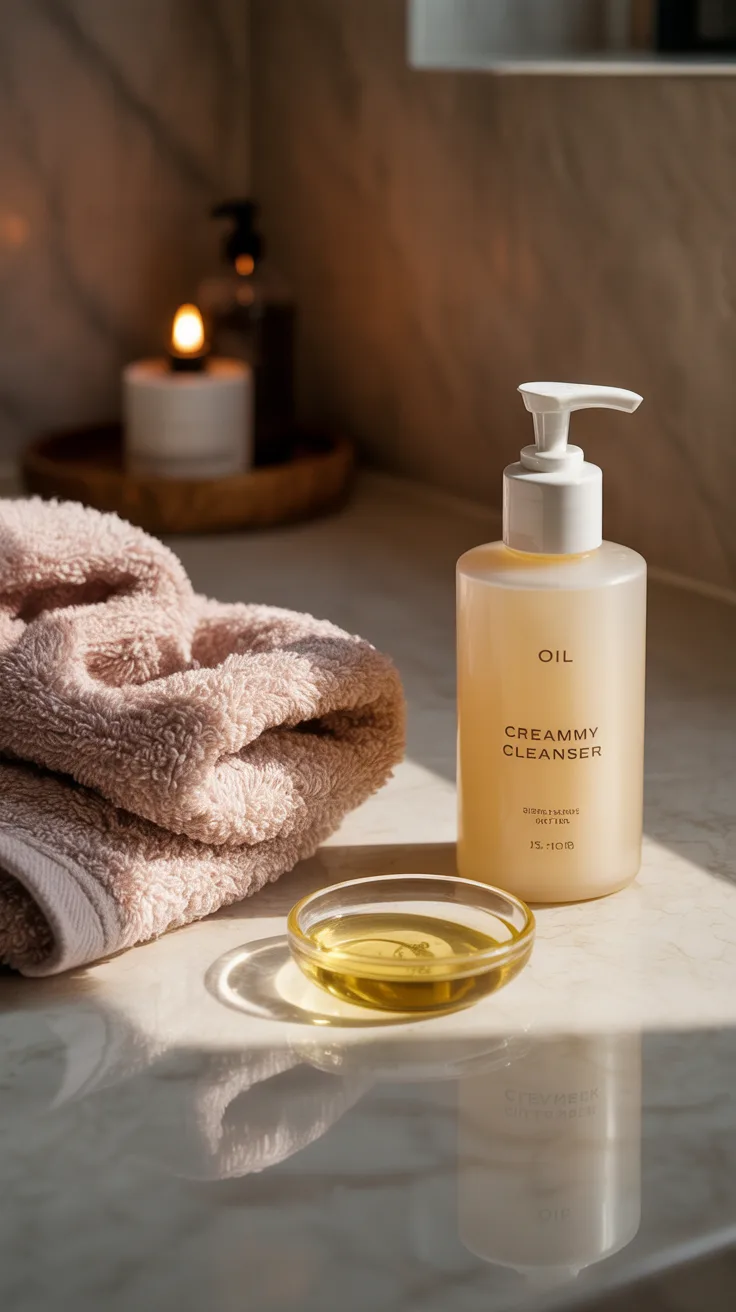
I made a critical mistake one winter using the same foaming cleanser I loved in summer—my face felt like sandpaper within days! Winter calls for a gentler approach to cleansing. Harsh cleansers strip away natural oils that your skin desperately needs during colder months.
Look for cream, oil, or balm cleansers that clean effectively without disrupting your skin’s moisture barrier. These formulations remove makeup and impurities while leaving behind essential moisture.
- Cream cleansers: Perfect for dry or sensitive skin, these provide hydration while cleansing
- Oil cleansers: Excellent for removing makeup and sunscreen without stripping moisture
- Balm cleansers: These solid-to-oil formulas provide deep cleansing with intense hydration
- Micellar water: A gentle option for quick cleansing that doesn’t require rinsing
I’ve found that washing my face with lukewarm (never hot) water also helps prevent unnecessary dryness. And remember—you might not need to cleanse twice a day during winter. Sometimes a morning splash with water is sufficient if you thoroughly cleansed the night before.
Incorporate a Hydrating Toner

Toners have come a long way from the astringent, alcohol-based formulas of the past. A hydrating toner is a game-changer in a winter skincare routine. I used to skip this step until I realized how much better my serums and moisturizers worked when applied to slightly damp skin.
Look for alcohol-free formulations containing ingredients like hyaluronic acid, glycerin, or rose water. These hydrating toners help restore your skin’s pH balance after cleansing while providing an initial layer of moisture. They also help subsequent products penetrate more effectively.
I apply mine by pouring a small amount into clean hands and gently pressing it into my skin rather than using a cotton pad, which can absorb too much of the product. This method ensures my skin gets maximum hydration.
Pro Tip: Keep a facial mist version of your hydrating toner in your bag for midday moisture boosts, especially if you work in a heated environment. A quick spritz can revive dry skin without disturbing makeup.
Moisturize Regularly
Consistent moisturizing is the cornerstone of any effective winter skincare routine. During my first winter in a cold climate, I learned that my once-daily application wasn’t nearly enough—by afternoon, my skin felt tight and uncomfortable.
Winter demands a richer moisturizer than you might use in warmer months. Look for formulas containing ceramides, fatty acids, and natural oils that help strengthen your skin barrier. The stronger your barrier, the better your skin retains moisture.
- Morning application: Apply moisturizer after serum and before sunscreen to lock in hydration
- Evening application: Use a slightly richer formula at night when skin naturally repairs itself
- Targeted application: Apply extra product to particularly dry areas like cheeks or around the nose
- Hand moisturizing: Don’t forget your hands, which often show signs of winter dryness first
I’ve found that applying moisturizer to slightly damp skin (after toner or serum) helps seal in additional hydration. And don’t rush the process—take time to gently massage the product into your skin, which improves circulation and absorption.
Pro Tip: Keep a travel-sized moisturizer in your bag, car, or desk drawer for touch-ups throughout the day. This has saved my skin during particularly harsh winter days when one application just isn’t enough.
Use Sunscreen Daily
One of my biggest skincare misconceptions was thinking I could skip sunscreen in winter. That mistake led to unexpected sun damage and hyperpigmentation that took months to fade. The truth is, UV rays are present year-round, and winter sun combined with snow reflection can actually increase UV exposure.
Choose a broad-spectrum sunscreen with at least SPF 30, applying it as the final step in your morning skincare routine. During winter, cream or lotion formulations tend to work better than gel versions, providing additional moisture along with protection.
If you’re spending time outdoors skiing or enjoying snow activities, remember that UV radiation increases with altitude, and snow reflects up to 80% of UV rays. In these conditions, reapplication every two hours is essential, just as it would be in summer.
I’ve found that mineral sunscreens containing zinc oxide or titanium dioxide not only provide excellent protection but also tend to be less irritating for winter-sensitive skin.
Opt for a Rich Night Cream
Nighttime is your skin’s recovery period, and winter nights call for extra support. I used to use the same moisturizer morning and night until I realized how much more hydrated my skin felt when I switched to a dedicated night cream during winter months.
Night creams are typically more concentrated and richer than day moisturizers. They’re designed to support your skin’s natural regeneration process while you sleep. Look for ingredients like peptides, ceramides, and nourishing oils that work overnight to repair and hydrate.
I apply my night cream after serums but before any spot treatments or facial oils. This layering technique ensures maximum benefits from each product. Don’t be afraid of a slightly tacky finish—that’s often a sign that the product is forming a protective barrier to lock in moisture overnight.
Don’t Forget Your Lips
Our lips lack oil glands and have thinner skin than the rest of our face, making them particularly vulnerable to winter dryness. I’ve suffered through painfully chapped lips many winters until developing a proper lip care routine.
- Lip balms with beeswax or shea butter: These ingredients create a protective barrier
- Overnight lip masks: Apply a thicker treatment before bed for intensive repair
- Gentle exfoliation: Use a soft lip scrub 1-2 times weekly to remove flaky skin
- Hydration from within: Drinking enough water helps prevent lip dryness
I keep lip balm everywhere—beside my bed, in my car, at my desk, and in every coat pocket. Consistent application throughout the day prevents dryness rather than trying to repair already chapped lips.
Pro Tip: Apply lip balm before lipstick or gloss to create a smooth base and prevent color from settling into dry, cracked areas—especially important for holiday parties and photos!
Exfoliate Gently
Exfoliation remains important during winter, but I’ve learned to adjust my approach. Over-exfoliating during my first cold season left my skin irritated and even more dehydrated. The key is to exfoliate gently and less frequently than you might in warmer months.
Chemical exfoliants like lactic acid or PHAs (polyhydroxy acids) tend to be gentler than physical scrubs and more effective at removing dead skin cells without irritation. They help improve product absorption and prevent the buildup that can make skin look dull.
I’ve reduced my exfoliation to once a week during winter, always following with extra hydration. This balanced approach keeps my skin smooth without compromising my moisture barrier.
Stay Hydrated from the Inside
External moisturizers are only part of the equation. I notice a dramatic difference in my skin when I neglect internal hydration during winter months. Between holiday cocktails and cozy coffees, it’s easy to forget about plain water.
Aim for at least eight glasses of water daily. I find that keeping a large water bottle with time markers helps me track my intake. Herbal teas count toward your daily fluid intake and provide the added benefit of warming you from the inside.
Foods with high water content can also contribute to hydration. Winter fruits like oranges and grapefruit, along with vegetables like cucumber and celery, help maintain moisture levels from within.
I’ve also found that limiting dehydrating beverages like alcohol and caffeine makes a noticeable difference in my skin’s appearance during winter months.
Frequently Asked Questions
How often should I moisturize my skin in winter?
I recommend moisturizing at least twice daily—morning and night—as part of your regular routine. However, if your skin feels tight or dry throughout the day, don’t hesitate to apply an additional layer. I often do a midday application on my cheeks and around my nose, which tend to get drier in winter. Listen to your skin’s needs rather than sticking to a rigid schedule.
Can I skip sunscreen on cloudy winter days?
Absolutely not! I made this mistake for years. Up to 80% of UV rays penetrate clouds, and they can also reflect off snow, potentially doubling your exposure. UV damage occurs year-round and contributes to premature aging and skin cancer risk. Daily sunscreen application should be a non-negotiable part of your winter skincare routine.
What are some natural remedies for dry skin in winter?
I’ve had great success with several natural approaches. Honey masks provide antibacterial benefits while hydrating skin. Avocado or coconut oil can work as overnight treatments for extremely dry areas. Oatmeal baths soothe irritated skin, and aloe vera gel provides gentle hydration. Just remember that natural doesn’t always mean non-irritating—always patch test new remedies before applying them to your entire face.
Is it necessary to change my skincare products seasonally?
Based on my experience, yes—at least partially. Your skin’s needs change with the seasons, particularly in regions with dramatic temperature shifts. You might not need to replace your entire routine, but adjusting key products like your cleanser and moisturizer can make a significant difference. I typically switch to more hydrating versions of my favorite products during winter while keeping treatments like vitamin C serum consistent year-round.
How can I prevent my skin from becoming flaky in winter?
Preventing flakiness requires a multi-faceted approach. First, avoid hot water when washing your face, as it strips natural oils. Second, incorporate gentle exfoliation 1-2 times weekly to remove dead skin cells before they cause flaking. Third, layer hydrating products from thinnest to thickest consistency. Finally, consider using a humidifier in your bedroom to add moisture to the air while you sleep. This combination has eliminated the winter flakiness I used to struggle with every year.