
Introduction
Winter can be a challenging season for those of us with sensitive skin. I’ve personally struggled with redness, flaking, and irritation during colder months, and I know I’m not alone. The combination of harsh outdoor conditions and dry indoor heating can wreak havoc on delicate skin barriers. After years of trial and error (and some memorable skincare disasters), I’ve developed a winter skincare routine that actually works for sensitive skin. In this article, I’ll share 12 essential tips to help you maintain healthy, comfortable skin throughout the winter season.
Understand Your Skin Type

Before diving into specific products, it’s crucial to understand what we’re working with. I spent years using the wrong products because I misdiagnosed my skin type. Sensitive skin isn’t actually a skin type—it’s a condition that can affect any skin type (dry, oily, combination, or normal).
My skin is both sensitive and combination, which means I need different approaches for different areas of my face. Your sensitive skin might be naturally dry, which requires extra hydration, or oily but reactive, needing non-comedogenic but gentle formulations.
To determine your specific type, observe how your skin feels a few hours after cleansing without applying any products. Is it tight and flaky (dry), shiny all over (oily), or some areas are oily while others are dry (combination)? This baseline understanding will guide all your product choices.
Pro Tip: Keep a skin journal during winter months to track how your skin reacts to different products and environmental conditions. I discovered my skin reacts poorly to wool scarves this way!
Choose the Right Cleanser
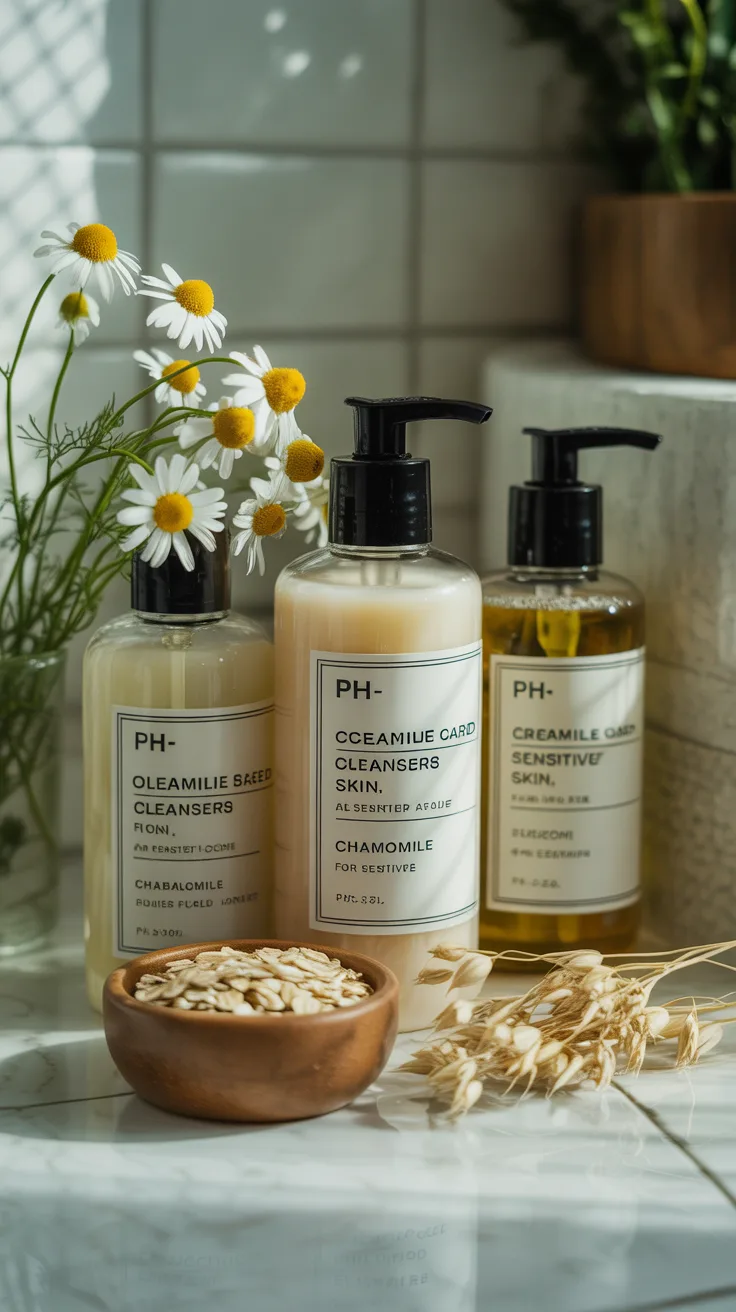
Cleansing is where many winter skincare routines go wrong. I used to think that squeaky-clean feeling was good until I realized I was stripping my skin barrier. For sensitive skin, gentle cleansing is non-negotiable.
Look for cream, oil, or balm cleansers that clean without disrupting your skin’s natural moisture. I’ve found that cleansers containing ceramides or hyaluronic acid help maintain hydration while removing impurities.
- Cream-based or milk cleansers that don’t foam aggressively
- Cleansers labeled “for sensitive skin” or “fragrance-free”
- Products with soothing ingredients like chamomile, aloe, or oat extract
- pH-balanced formulations (ideally around 5.5)
- Micellar water as a gentle makeup remover before cleansing
Avoid cleansers with sulfates, alcohol, artificial fragrances, or exfoliating beads, which can all trigger irritation. I learned this lesson the hard way after trying a popular “refreshing” cleanser that left my face burning for hours.
Moisturize Regularly

Consistent moisturizing is the cornerstone of any effective winter skincare routine. I’ve found that applying moisturizer to slightly damp skin helps lock in hydration more effectively.
During winter, I switch from my lightweight summer lotion to a richer cream formula. The key is finding a balance—too heavy and you might experience congestion, too light and you won’t get enough protection against the elements.
For morning application, I use a medium-weight moisturizer that sits well under sunscreen and makeup. In the evening, I apply a more intensive formula that can work overnight. If you’re experiencing extreme dryness, don’t be afraid to reapply throughout the day over makeup using a patting motion.
Pro Tip: Keep a travel-sized moisturizer in your bag for touch-ups during the day, especially if you wash your hands frequently or work in a dry environment.
Incorporate Hydrating Serums
Serums changed my sensitive skin game completely. These concentrated formulas deliver active ingredients deeper into the skin than moisturizers alone. For winter, hydrating serums are particularly beneficial.
I layer my serum between cleansing and moisturizing, giving it a minute to absorb. The right serum adds an extra dimension of protection without feeling heavy.
- Hyaluronic acid serums to draw moisture into the skin
- Niacinamide formulations (usually 5% or less for sensitive skin) to strengthen the barrier
- Centella asiatica (cica) serums to calm inflammation and redness
- Glycerin-based products for gentle hydration
- Peptide serums to support skin repair
I once made the mistake of using a vitamin C serum that was too potent for winter use, which resulted in unexpected irritation. Start with gentler formulations and increase strength gradually if needed.
Protect Your Skin from the Sun
One of my biggest skincare misconceptions was thinking I could skip sunscreen in winter. The reality? UV rays don’t take winter vacations. In fact, snow can reflect up to 80% of UV rays, increasing your exposure.
For sensitive skin, mineral sunscreens containing zinc oxide or titanium dioxide are generally less irritating than chemical formulations. I look for broad-spectrum protection with at least SPF 30, applying it as the final step in my morning routine.
Winter sunscreen application requires some adjustments. I’ve found that warming the product between my fingers before applying helps it spread more easily on cold skin. And don’t forget often-missed areas like your ears, neck, and hands—especially when enjoying winter sports or activities.
Use a Humidifier
This simple device has been transformative for my winter skincare routine. Indoor heating systems drastically reduce humidity levels, which can pull moisture directly from your skin. I noticed a remarkable difference when I started using a humidifier in my bedroom.
I keep mine running overnight at about 50-60% humidity, which helps prevent the moisture loss that occurs during sleep. After just a few nights, the persistent dry patches around my nose began to heal.
If you can’t place humidifiers throughout your home, prioritize your bedroom since you spend the most uninterrupted time there. Clean your humidifier regularly according to manufacturer instructions—I learned the hard way that neglected humidifiers can harbor mold and actually worsen skin issues.
Avoid Hot Showers
I know how tempting a steaming hot shower is when it’s freezing outside—it was one of my favorite winter indulgences. Unfortunately, it was also contributing to my skin problems. Hot water strips away natural oils, compromising your skin barrier and leading to dryness and irritation.
I’ve gradually trained myself to use lukewarm water instead, especially when washing my face. The adjustment period was challenging, but my skin thanked me with less redness and tightness afterward.
To make the transition easier, I start with warmer water and gradually reduce the temperature throughout my shower, ending with cooler water. This approach gives me the psychological comfort of warmth while minimizing damage to my skin.
Pro Tip: Apply body moisturizer within three minutes of stepping out of the shower while your skin is still slightly damp to maximize hydration.
Exfoliate Gently
Exfoliation is tricky territory for sensitive skin, especially in winter. I’ve found that reducing both the frequency and intensity of exfoliation helps maintain my skin barrier while still addressing flakiness.
Chemical exfoliants with lower percentages of PHAs (polyhydroxy acids) or very mild AHAs (alpha hydroxy acids) tend to be gentler than physical scrubs. My approach is “less is more”—I exfoliate just once a week during winter months.
- Lactic acid (5% or less) for gentle chemical exfoliation
- Enzyme-based exfoliants from papaya or pineapple
- Soft microfiber cloths for very mild physical exfoliation
- Products with “buffering” ingredients like aloe or glycerin
After any exfoliation, I immediately follow with extra hydration and avoid other active ingredients for 24 hours. This prevents the sensitization that can occur when combining treatments.
Choose Skin-Friendly Fabrics
The connection between clothing and skin health becomes especially apparent in winter. I’ve noticed that certain fabrics directly against my skin can trigger irritation and worsen existing sensitivity.
Cotton and silk are my go-to choices for base layers that touch my skin directly. For scarves that contact my face, I choose only the softest materials and wash them with fragrance-free detergent before wearing. After developing an unexpected rash from a new wool sweater, I now layer a cotton shirt underneath any potentially irritating fabrics.
Don’t forget about bedding—I switch to 100% cotton pillowcases in winter and change them more frequently to prevent buildup of products, oils, and dead skin cells that can irritate sensitive skin.
Stay Hydrated
It’s easy to forget about internal hydration when focusing on external moisturizing, but I’ve found that drinking enough water makes a noticeable difference in my skin’s resilience. During winter, I’m less naturally thirsty, so I have to be more intentional about hydration.
I keep a thermal water bottle on my desk and set reminders to drink throughout the day. Herbal teas count toward hydration goals and provide the psychological comfort of warmth. I’ve also increased my consumption of water-rich foods like cucumbers, oranges, and clear soups.
The connection between hydration and skin health isn’t just anecdotal—proper hydration supports all your body’s functions, including the skin’s ability to maintain its barrier and heal itself.
Avoid Fragranced Products
Fragrance in skincare products is one of the most common triggers for sensitive skin reactions. I learned this through painful trial and error after a scented “calming” face mask left my skin anything but calm.
Even products labeled “unscented” may contain masking fragrances, so I look specifically for “fragrance-free” on labels. This applies not just to facial products but to all skincare items, laundry detergents, and household cleaners that might come in contact with your skin.
Essential oils, while natural, can also be significant irritants. I’ve found that products containing lavender or tea tree oil—often included for their supposed soothing properties—actually trigger reactions in my sensitive skin, especially during winter when my barrier is compromised.
Consult a Dermatologist
After struggling for years with winter skin issues, booking an appointment with a dermatologist was transformative. Professional guidance helped me understand that what I thought was just sensitivity was actually mild rosacea exacerbated by winter conditions.
A dermatologist can provide personalized advice based on your specific skin concerns and may recommend prescription treatments that aren’t available over the counter. They can also help identify if your skin issues are related to underlying conditions like eczema, psoriasis, or allergies.
I now schedule a dermatology check-up every fall to prepare for winter and adjust my routine proactively rather than reactively. This preventative